Skip to navigation | Skip to main content | Skip to footer
The University of Manchester home
Centre for AI Fundamentals
  • Centre for AI Fundamentals
    • Research
    • Connect
    • About
  • Home
  • Research

    Postgraduate

  • Connect

    Events

    Partnerships

    Work with us

    Academic visitors

    Internships

  • About

    People

    News

  • Centre for AI Fundamentals
    • Research
    • Connect
    • About
Students seated in a large classroom listening to a presenter, with laptops open and a presentation.

See the most recent AI Fundamentals lectures

Visit our YouTube channel to see the excellent talks we have hosted.

YouTube channel of the Manchester Centre for AI Fundamentals

About us

We shape the foundations of next-generation AI

Our new Centre for AI Fundamentals is a cross-disciplinary home for foundational artificial intelligence at The University of Manchester. It is a key component of a number of significant investments we have made into AI education, innovation and industrial collaboration.

We boldly focus on fundamental AI research, which includes probabilistic modelling, deep learning, reinforcement learning, causal modelling, human-in-the-loop machine learning, explainable AI, ethics, privacy and security.

The fundamentals are in motion - in particular, deployment and collaboration with people are centrally important fundamental AI problems, not only post-hoc issues. We develop AI that works well with humans and in deployment.

Centre highlights

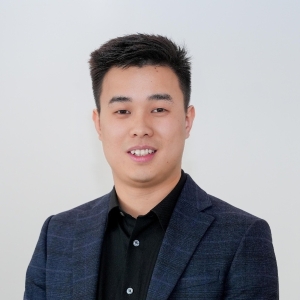
Mingfei Sun appointed as ELLIS Scholar

We are pleased to announce that Mingfei Sun has been appointed as a new Scholar within the European Laboratory for Learning and Intelligent Systems (ELLIS).

Find out more in our news article

A person smiling.

ELIAS Manchester Node

The University of Manchester has been selected to establish a new ELIAS Node, becoming only the second UK institution to join the European AI innovation network, alongside Cambridge.

Read our press release for full details

ELIAS Manchester Node

AI studentships for 2027

The Centre for AI Fundamentals is offering 15 PhD opportunities across AI, health, engineering and materials.

See project details on LinkedIn

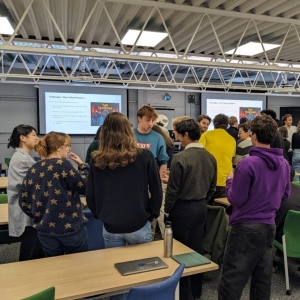
Students gathered at an indoor event.

Workshop on Uncertainty in Machine Learning

This long-running workshop takes place in Manchester for 2027 and will bring together researchers interested in Uncertainty in Machine Learning.

Full details available at the workshop website

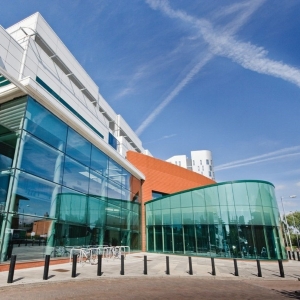
Core Technology Facility at The University of Manchester.

News

Show previous news story Show next news story

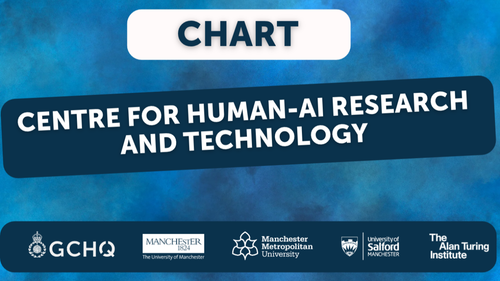
GCHQ and Greater Manchester universities launch major new human-AI research centre

Leading researchers will explore how humans and artificial intelligence can work together, helping shape the future of work and national security

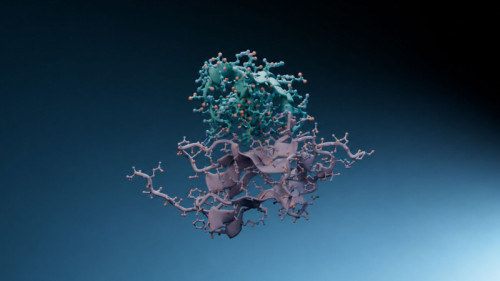
Manchester scientists demonstrate AI-designed enzyme for drug synthesis

The new RFD4-Proteina unified generative model for protein design – created by the Institute for Protein Design (IPD) in collaboration with NVIDIA – uses advanced AI to generate entirely new protein sequences and structures, achieving computational design success rates five to ten times higher than previous models and generating candidates five to ten times faster.

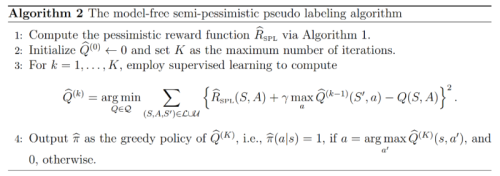
Semi-pessimistic Reinforcement Learning paper accepted in JASA.

Omar Rivasplata's key paper on Reinforcement Learning via semi-pessimistic pseudo labelling has been accepted in JASA, the Journal of the American Statistical Association.

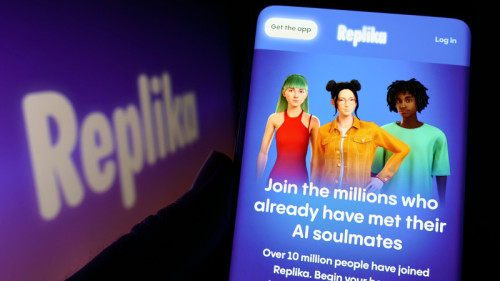
When AI breaks your heart

Dr Jennifer Cearns is a digital anthropologist, specialising in AI and algorithms in social life. Her research focuses on how people relate to one another through emerging intelligent technologies and she is currently conducting researching into Human-AI relations, looking at intimacy and how trust and empathy forms between humans and AIs.As people increasingly search for connection in an often-isolated modern world, the line between technology and companionship is blurring. By examining what happens when those bonds with AI falter, Dr Cearns’ work sheds light not only on the ethics of human-machine intimacy, but also on the wider human search for belonging.In her most recent project, she has used digital ethnography and interviews to examine how users emotionally invest in AI ‘soulmates’ – AI chatbots that become romantic partners to humans – and the grief that follows their malfunction or shutdown. This research is critical for highlighting new forms of kinship and ethical care in human-machine relationships.Meet the researcherJennifer Cearns is Lecturer in AI Trust and Security, in the Department of Social Anthropology. Her research explores how people form emotional, romantic, and therapeutic relationships with AI, focusing on kinship, ethics, and cultural understandings of personhood.Email Dr Cearns >>Email the Business Engagement Team >>View academic profile >>Read her papersKinship through code, personhood as node: AI afterlives and new technologies of the selfDivining Truth: Towards an Epistemology of AI

AI engineers know the ethical risks presented by AI, but workplace culture prevents action

AI engineers often recognise ethical risks associated with the systems they build, but many lack the authority, incentives and organisational support needed to act on them, according to new research from The University of Manchester. 

Creativity, AI and Collaboration: Looking Back on CreaTech 2026

Between February and June 2026, the CreaTech Network Series brought together researchers, creatives, cultural organisations and industry partners from across Greater Manchester and the North West to explore the opportunities and challenges presented by emerging digital technologies. Delivered by Digital Futures, Creative Manchester and Turing Innovation Catalyst Manchester, the series explored creativity and AI through three events focused on entertainment, cultural heritage, and free and open-source technologies. Each event combined short talks with panel discussions and audience questions, creating space for people from different sectors to share perspectives and experiences. Creativity and AI: EntertainmentThe series opened at Contact Theatre with a discussion on the growing role of AI across film, television and games. Hame Sehmi, Lead Research Engineer at Epic Games, shared examples of how AI tools are being used in areas such as facial animation and digital production workflows. Tillie Quattrone from The University of Manchester explored the use of AI in digital de-ageing for film and some of the questions these technologies raise around creative work and production. The talks were followed by a panel discussion and audience Q&A, which sparked conversation about how AI is changing the entertainment industry.   Creativity and AI: Cultural HeritageThe second event took place at Manchester Art Gallery and focused on the use of AI within libraries, archives and museums. Jennie Fletcher and Lesley Gray from the University of Cambridge introduced the AI for Cultural Heritage Hub (ArCH), which is supporting organisations to explore new ways of making collections more accessible. Jason Evans, Open Data Manager and AI Lead at the National Library of Wales, shared examples of how AI is being used to improve access to cultural collections and support new forms of public engagement. Dr Benjamin Wiggins from The University of Manchester also reflected on how AI can work alongside approaches such as crowdsourcing and public participation. Audience questions continued the discussion, with conversations ranging from practical applications of AI through to the challenges and responsibilities that come with its use.  Creativity and AI: Free and Open-Source TechnologiesThe final event in the series was held at SISTER and explored the role of free and open-source technologies in creative and cultural practice. Jan Macháček, Principal Engineer and Visiting Professor at The University of Manchester, spoke about the opportunities that open technologies create for learning, experimentation and collaboration. Eriol Fox brought a design perspective to the conversation, discussing accessibility and inclusion in the development of digital tools. The wider panel, which included Mengzhi He and Julian Tait, CEO of Open Data Manchester, explored the importance of community, skills and knowledge sharing across the sector. The event concluded with a panel discussion and audience Q&A, giving attendees the opportunity to reflect on the future role of open technologies in creative practice. Across all three events, participants explored how emerging technologies are influencing creative work in different ways, from film production and storytelling to cultural collections and open-source communities. The series created opportunities for knowledge exchange, new partnerships and cross-sector collaboration, helping to strengthen connections across the region's CreaTech ecosystem. We'd like to thank all the speakers, attendees and partners who contributed to the programme, and we look forward to continuing these conversations through future CreaTech Network activities. 

ELLIS Summer School success!

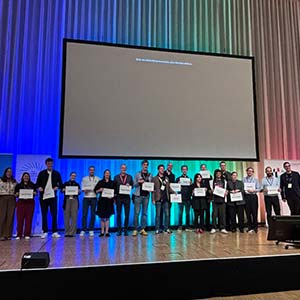
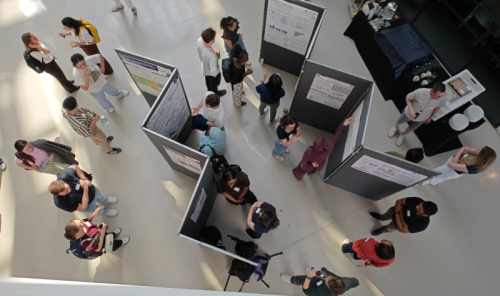
After three successful events between 2023 and 2025, the ELLIS Society approved our fourth summer school on Machine Learning for Healthcare and Biology. As in previous years, this three-day event brought participants up-to-speed on the latest methods and technologies in machine learning with a focus on healthcare and biology. 12 expert researchers visited from 8 European organisations, with sessions covering DNA language models for engineering biology; ‘Swarm’ intelligence; Real-world validation of healthcare LLMs and many more topics. Participants also had an opportunity to showcase their own work at our research poster session. ​​​Feedback has been overwhelming! We created a video featuring some of the feedback but here are a couple of quotes that didn't make it into the final edit: Keep an eye on ellismcr.org: we have some big news coming very soon…

Contribute to Shaping the Digital Worlds Theme!

"The funding landscape is moving under our feet. UKRI and the research councils are shifting decisively towards research done with industry. This includes partnership expectations written into calls, co-created programmes, impact measured in adoption and so on. It is really important to me that we understand can the theme help you be prepared and build a wider collective UoM collaborative space to be prepared and perhaps discover new ways of working in the process? Our theme has enormous potential in many areas from digital twins, sensing and connected environments, immersive and virtual worlds. Realising that potential often it starts with a conversation with the right partner at the right moment or having assistance in maintaining conversations and partnerships already in place."David Topping, Digital Worlds Theme Lead, is inviting The University of Manchester colleagues to complete a short consultation that will help shape how the Digital Worlds theme works with industry and business partners over the coming year.In return of colleagues completing this short consultation, the intention is to build a recurring offer:- An annual Digital Worlds Industry Showcase- Two themed roundtables a year (digital twins; sensing and connected environments; immersive and virtual environments; the physical–virtual interface)- A live partnership map and case-study repository- An annual report back to everyone who contributePlease complete the consultation via the link below:https://bit.ly/digitalworldsformThe survey should take approximately 10–15 minutes to complete.Alternatively, if you would prefer an informal conversation, David Topping would be pleased to hear from you at david.topping@manchester.ac.uk.

Watch our latest talks

Aurélien Bibaut | How to make decisions with a reward model

Jin Zhu | Statistics-powered detection of LLM-generated text

Santiago Mazuelas Franco | Beyond empirical risk minimization

Contact us

  • +44 (0)161 306 6000
  • Contact details

Find us

The University of Manchester
Oxford Rd
Manchester
M13 9PL
UK

Connect with us

  • YouTube page for Centre for AI Fundamentals
  • LinkedIn page for Centre for AI Fundamentals

  • Disclaimer
  • Data Protection
  • Copyright notice
  • Accessibility
  • Freedom of information
  • Charitable status
  • Royal Charter Number: RC000797